Highlights from the annual Predator Free 2050 Landscape Projects hui
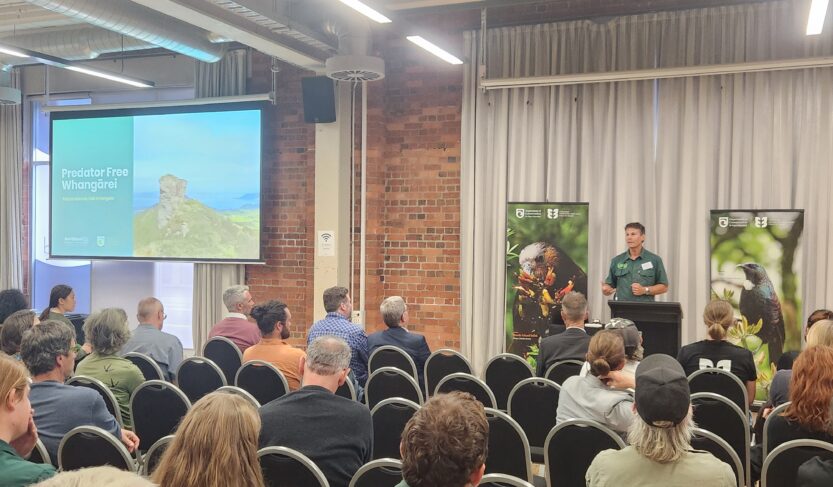
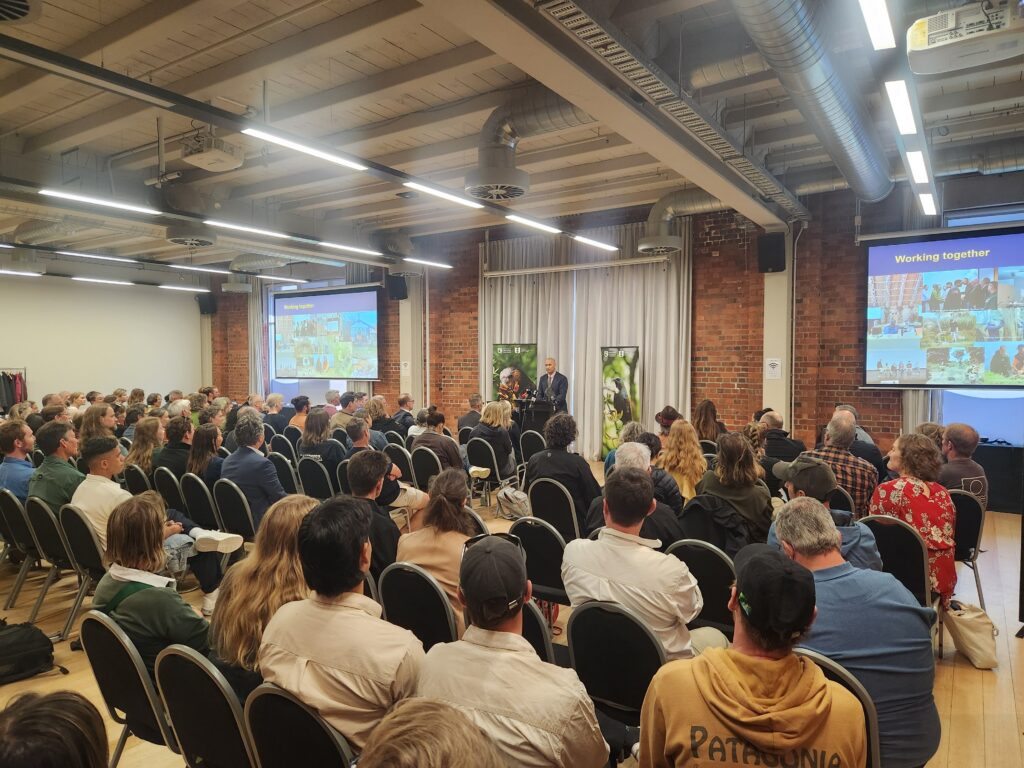
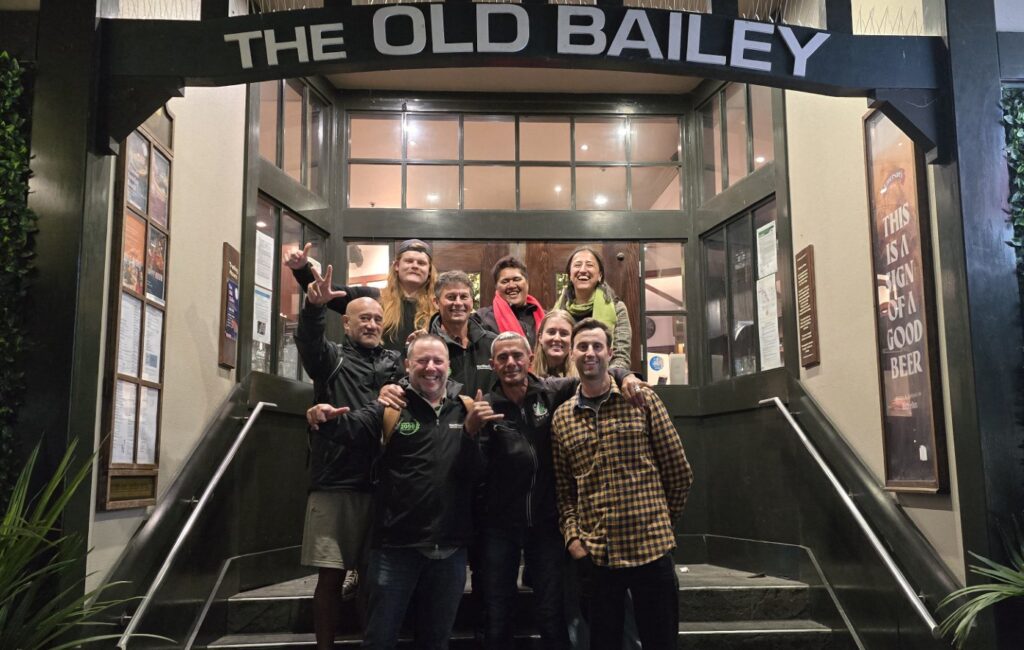
In March, half of our team attended the annual Predator Free 2050 Landscape Projects hui in Te Whanganui-a-Tara Wellington. It was a busy 2-and-a-half-day hui, with lots of learning and networking. The event was a great opportunity to reconnect with old friends, make new connections and learn from the experience of our sibling projects around the motu.
On the first day, Conservation Minister Tama Potaka announced $5.5m of new DOC funding over 5 years to support Predator Free Wellington and Capital Kiwi to increase their scale and make Te Whanganui-a-Tara Wellington the first predator-free city in Aotearoa by 2030. He also launched the Predator Free 2050 Strategy and National Action Plan 2026-2030 which set up four focus areas – Mobilise for Action, Maintain the Gains, Innovate for Eradication and Prepare to Accelerate. Nineteen goals were identified to achieve the programmes’ objectives with 5 key goals highlighted as critical:
- 1 in 2 New Zealanders is aware of PF2050 (currently 39% of New Zealanders are aware of PF2050)
- All large-scale PF2050 projects actively support the aspirations of local Imi, Iwi and Hapū
- Populations of threatened species are secure and thriving in areas where elimination has been achieved
- The ability to defend predator-free areas against reinvasion is faster and more cost effective
- One NZ city is free of predators.
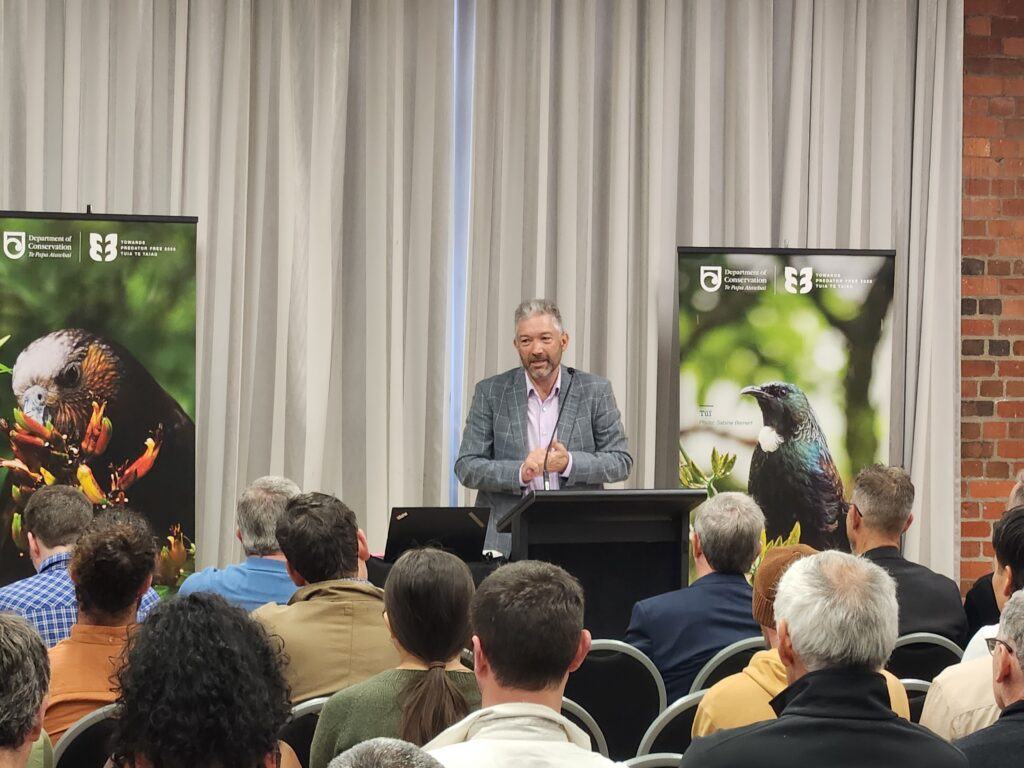
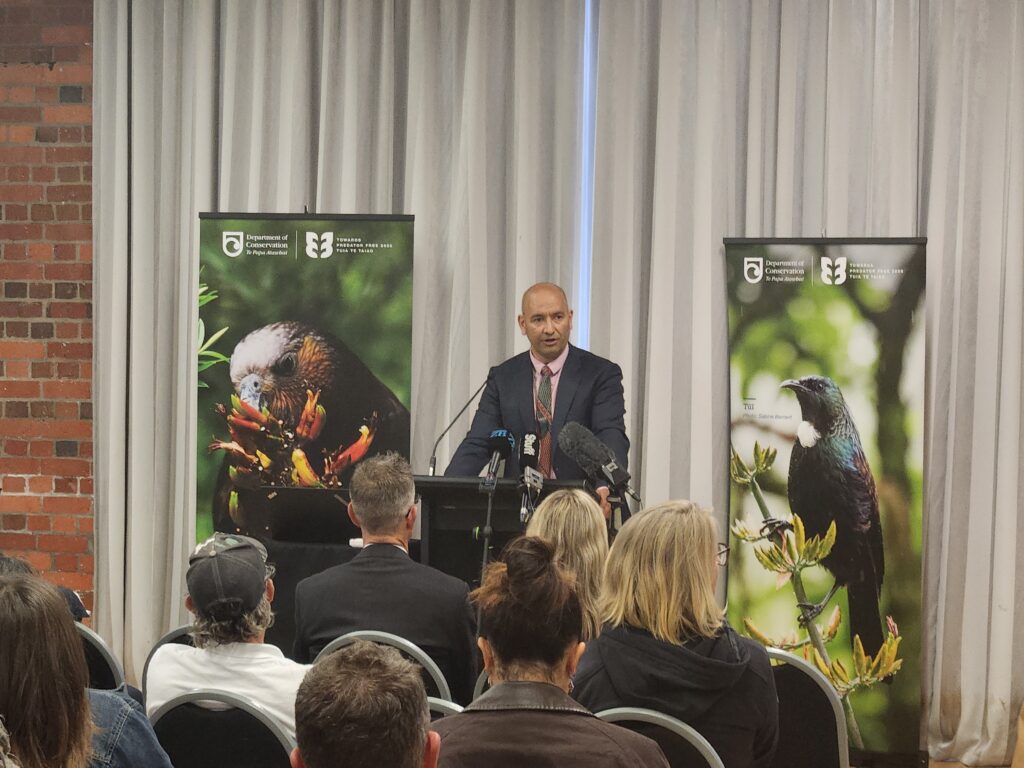
We also heard from Penny Nelson, DOC Director-General, and the newly appointed DOC PF2050 Programme Manager, Pim de Monchy. Pim gave a strong signal to the nineteen landscape projects attending the conference that mainland elimination is achievable and that DOC will be backing programmes that have achieved success to date, and are committed to increasing scale, by providing new funding for landscape projects.
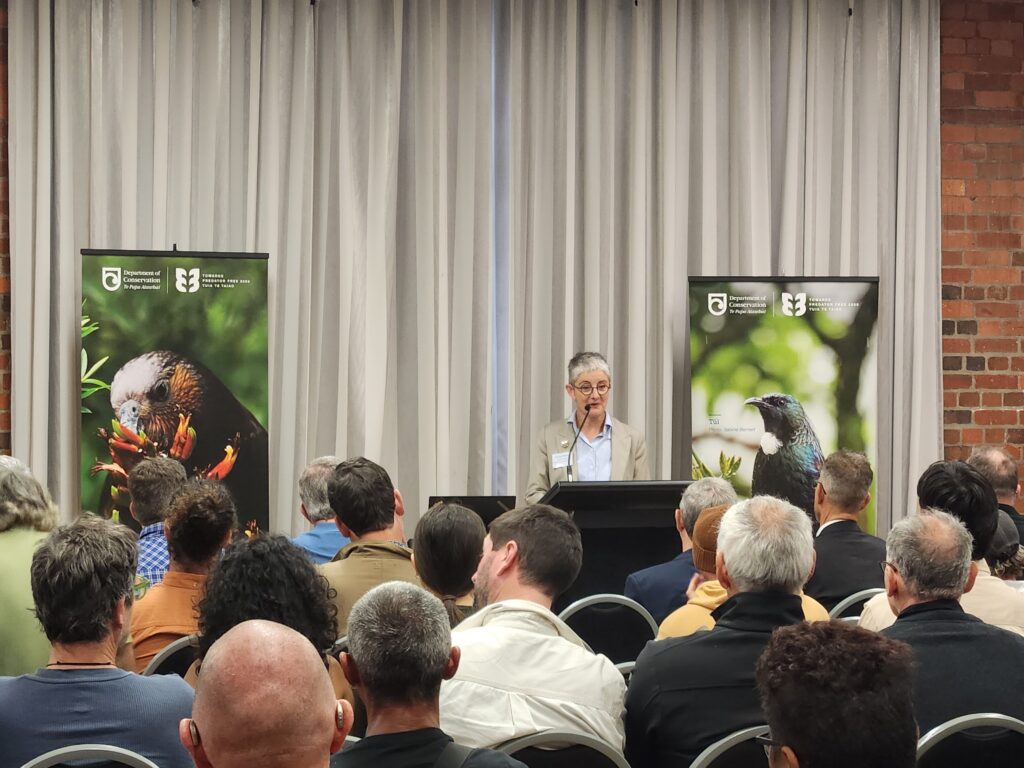
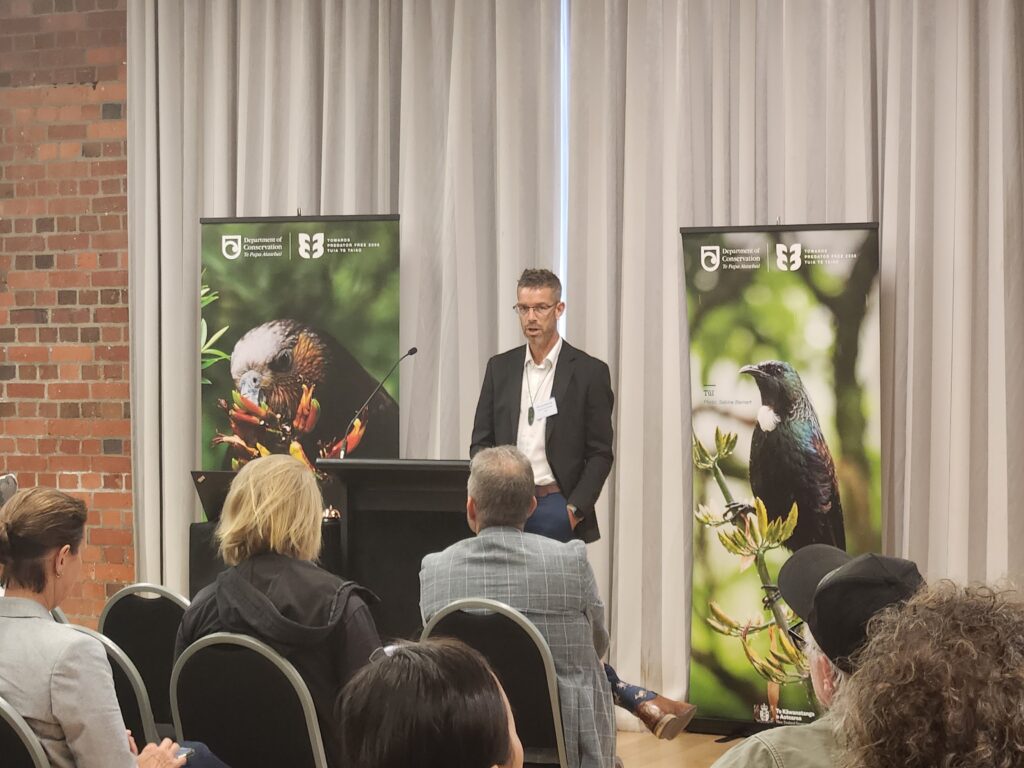
De Monchy reinforced some key aspects:
- – the importance of landscape programmes having a multi-species approach to elimination (possums, rats, mustelids and feral cats)
- – embed mana whenua leadership and co-governance in project design, monitoring and decision-making, and incorporate mātauranga Māori into predator free practices.
- – being cost-effective at “maintaining the gains” while preparing for acceleration from 2030.
- – DOC will lead the business case for future expansion.
Still on day one, all projects presented their key learnings and highlights in pecha kucha style presentations, which made for a dynamic and engaging storytelling and knowledge sharing. Oly and Zac spoke on behalf of our project.
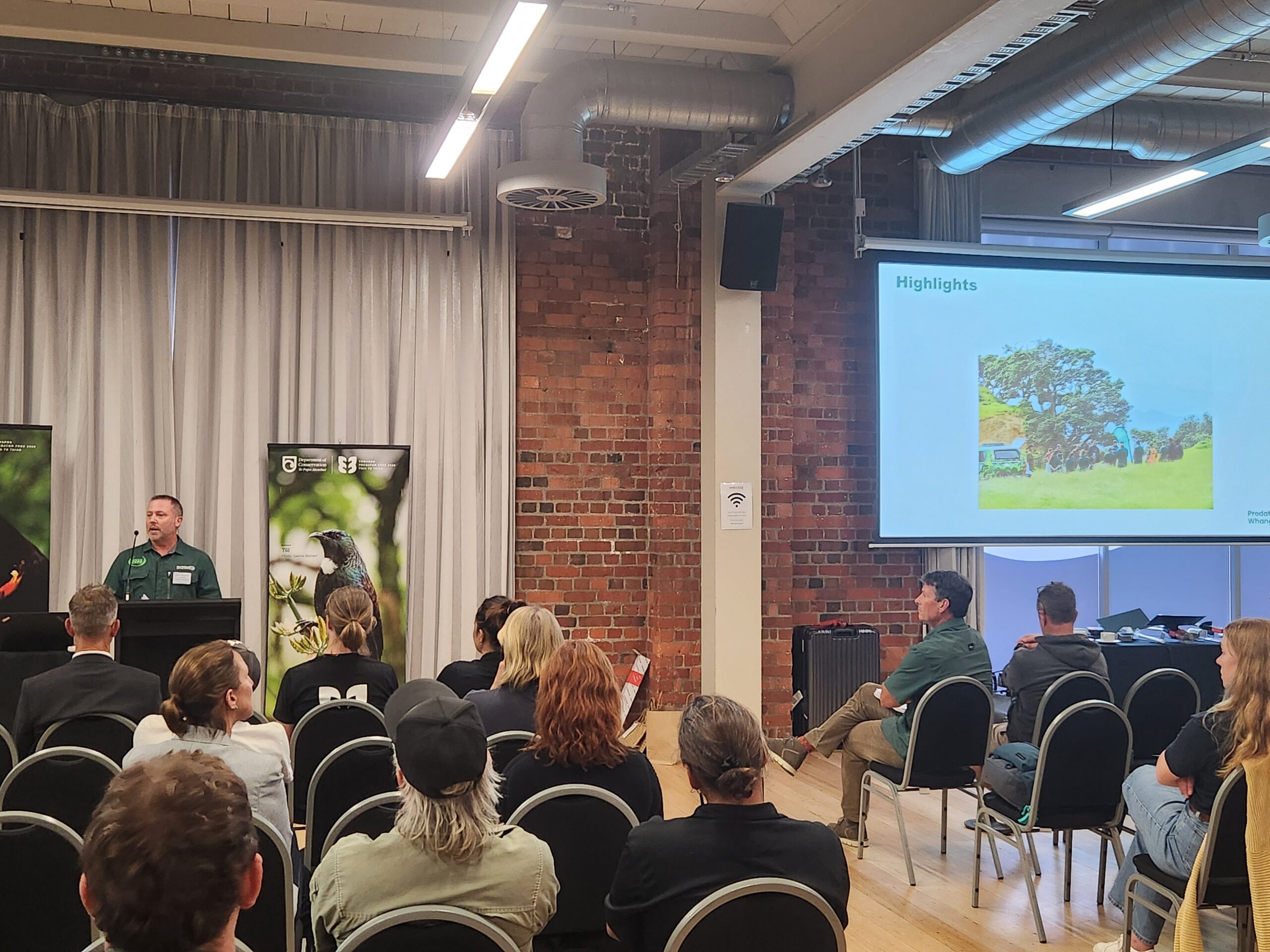
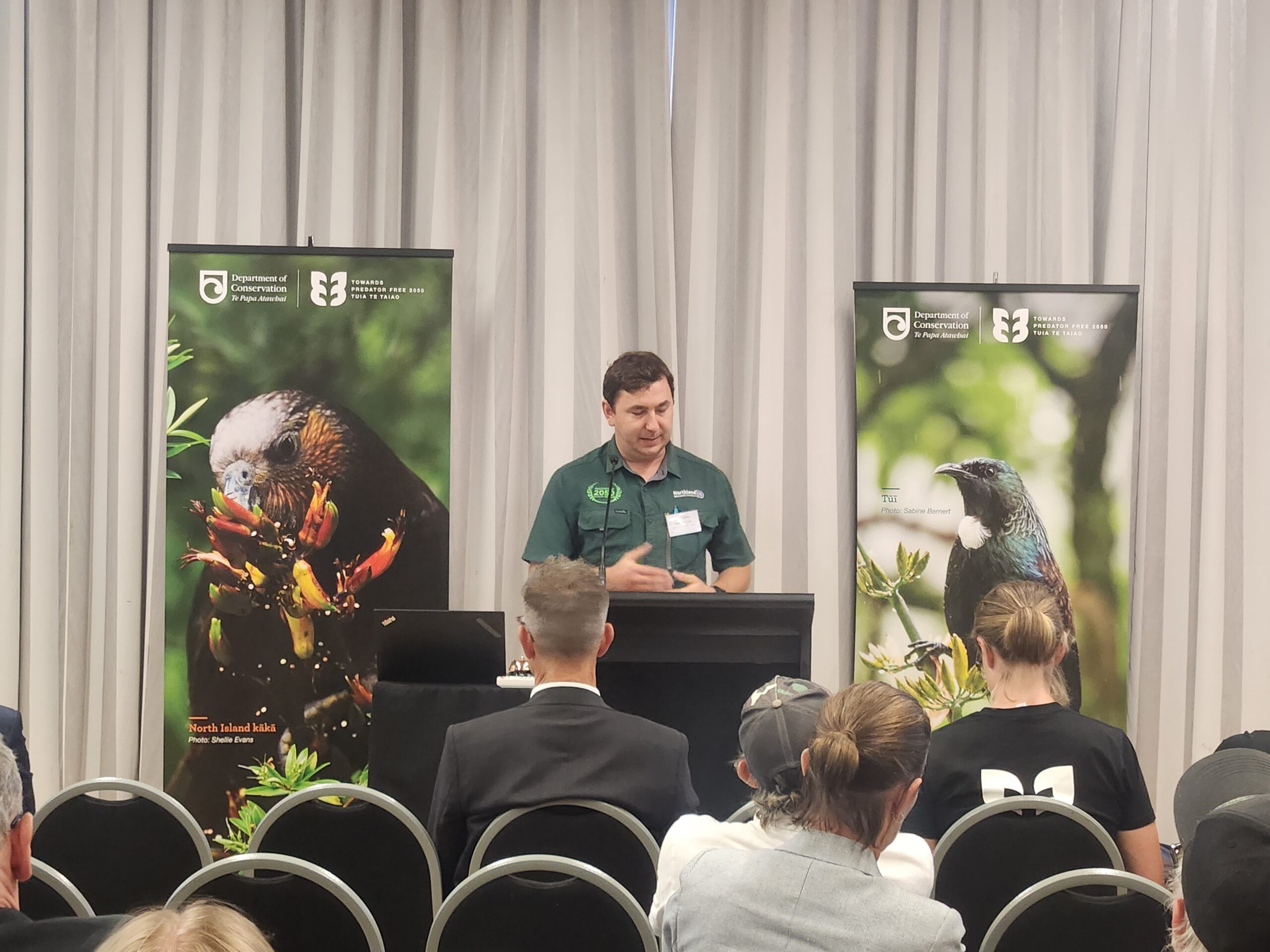
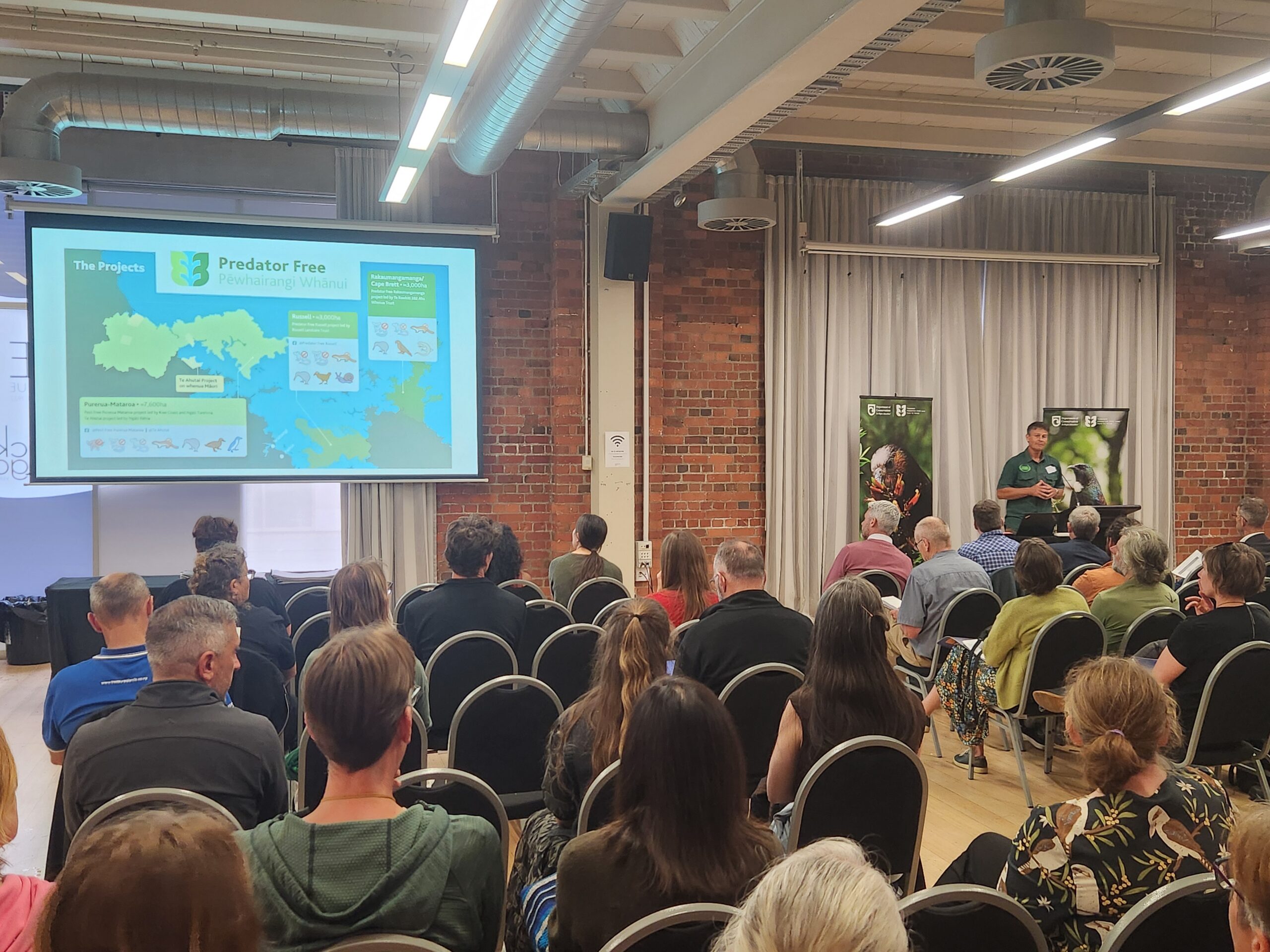
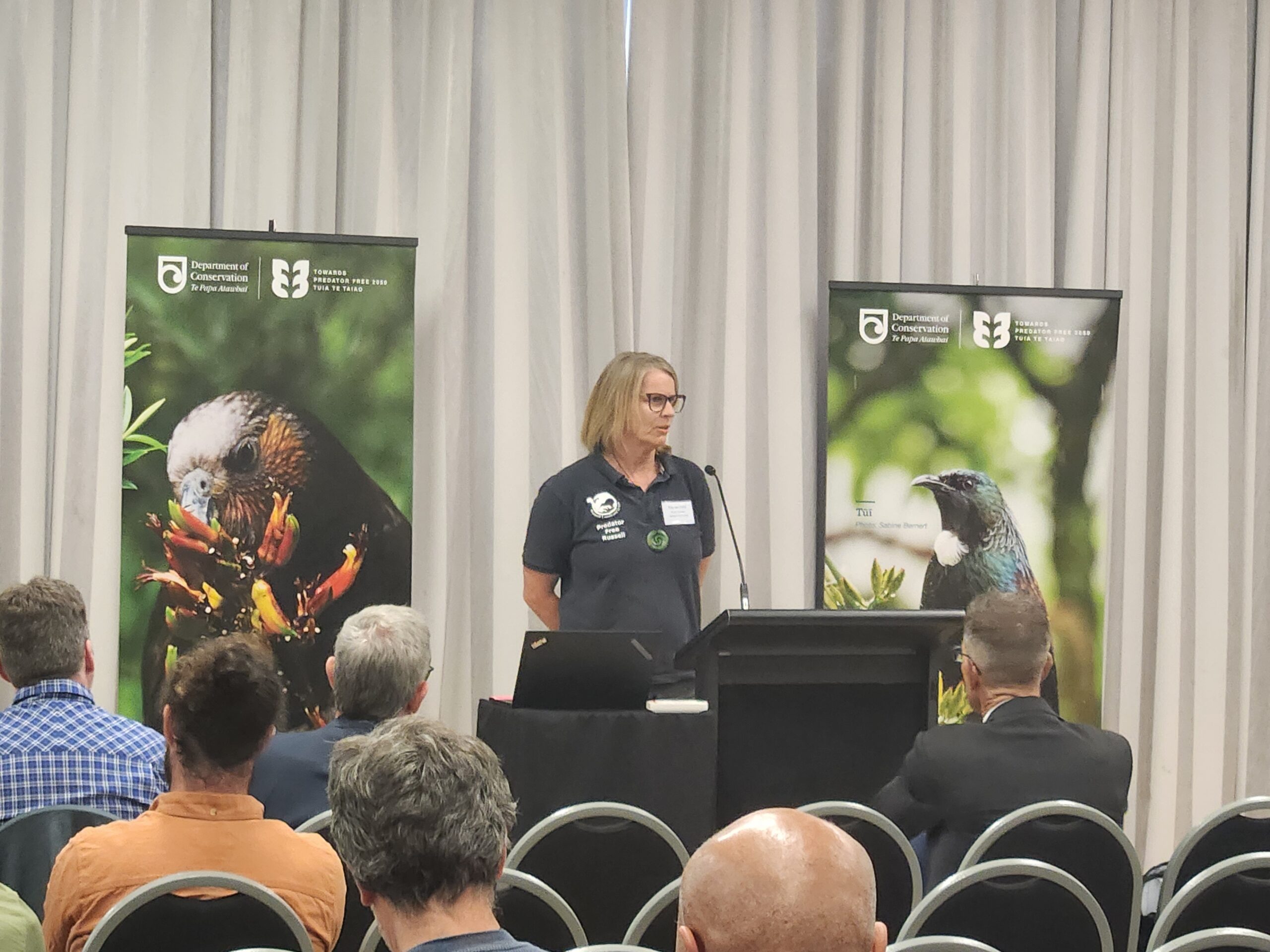
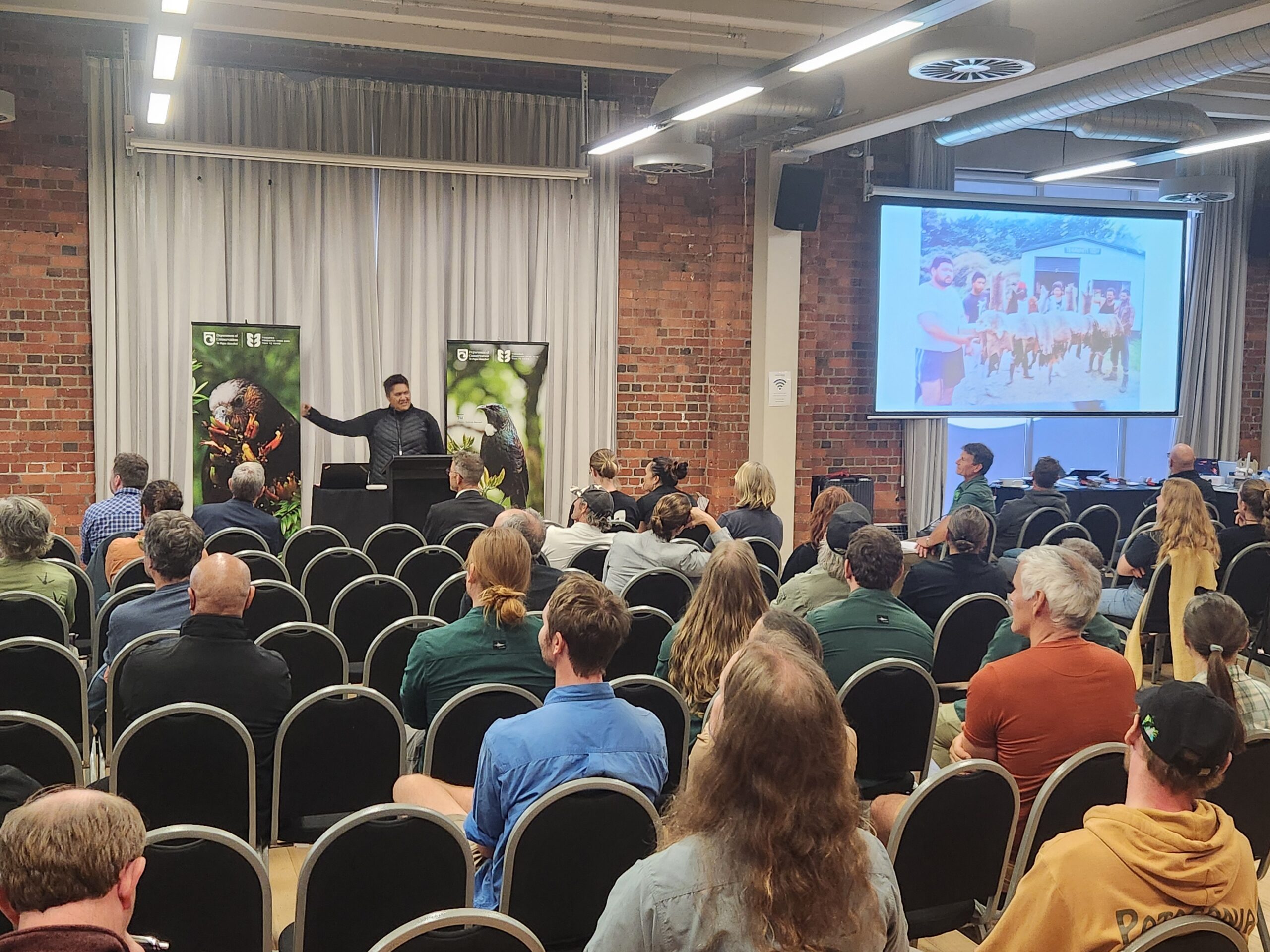
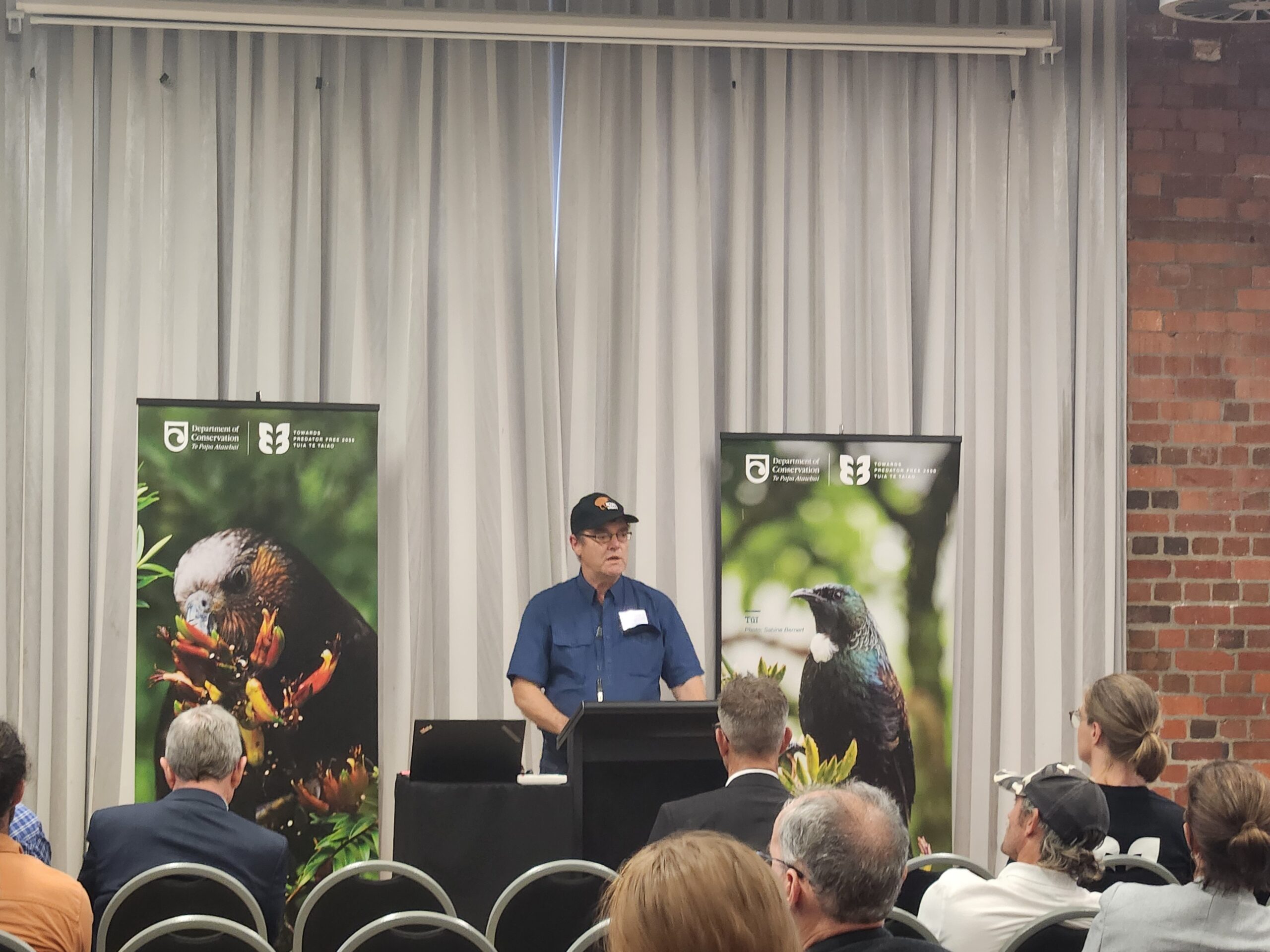
Day two brought us insightful kōrero around data, storytelling and support to mana whenua aspirations through our projects, with the Kaitiakitanga Project impact video as a highlight. There was also good discussions on how to get around some of the main challenges of elimination, multi-species expansion approaches and how to strategically scale up our projects.
Kaitiakitanga Project – Impact video presented at the hui
The final morning of the hui brought important conversations about funding approaches, with Sam as part of the panel for the session, and taming the challenges of land access with Oly’s participation on the panel.
A few topics came up throughout the hui at different panels and kōrero, such as the emphasis on moving to multi-species over expansion of hectarage (more defendable), the extensive use of new technology, and as expected, detection dogs are playing a critical role across all advanced projects as a key indicator tool
We left the hui feeling inspired to face the next stage of our project. It also reassured us that we are strongly placed to achieve the goals identified by DOC, with great landowner support, cost-effective operations and support to mana whenua’s aspirations.
17/04/2026


